

View cart “Yellow Face Angelfish” has been added to your cart.
Blue Powder Tang
Additional information
₹0.00
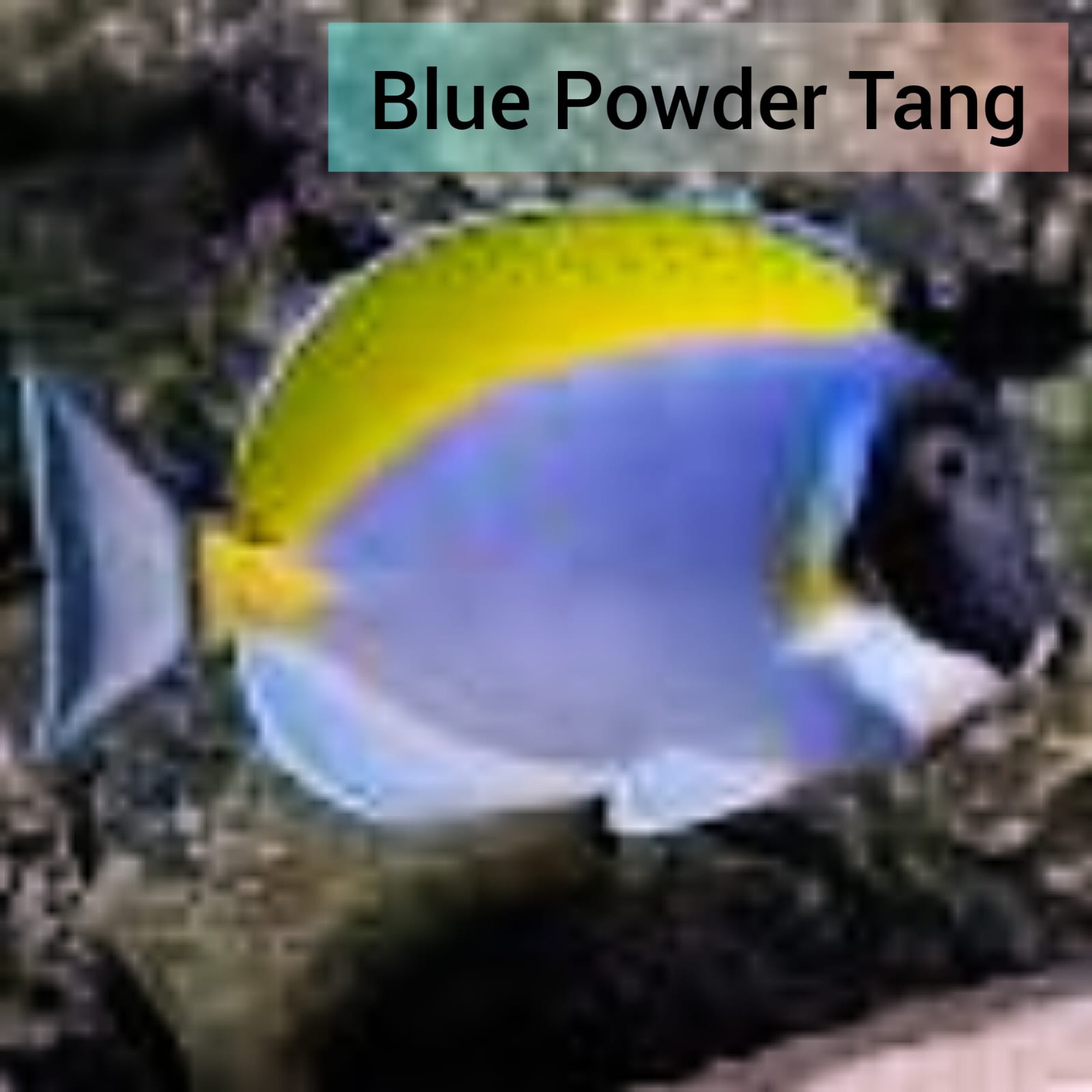
The Powder Blue Tang is one of the most striking marine fish, instantly recognizable for its vibrant sky-blue body, bold black facial mask, bright yellow dorsal fin, and white chest. Native to the Indian Ocean, this species is highly prized in reef aquariums for its intense coloration and constant activity. However, it is also known to be sensitive and best suited for experienced aquarists.
Powder Blue Tang (Acanthurus leucosternon) – Complete Care Guide
Description
The Powder Blue Tang is one of the most striking marine fish, instantly recognizable for its vibrant sky-blue body, bold black facial mask, bright yellow dorsal fin, and white chest. Native to the Indian Ocean, this species is highly prized in reef aquariums for its intense coloration and constant activity. However, it is also known to be sensitive and best suited for experienced aquarists.
Water Parameters
Stable, high-quality marine conditions are essential:
Temperature: 24–27°C (75–81°F)
pH: 8.1–8.4
Salinity: 1.023–1.025 SG
Alkalinity: 8–12 dKH
Tank Size: Minimum 400 liters (100 gallons)
Water Flow: Moderate to strong
Water Changes: 10–20% biweekly
Care & Maintenance
Powder Blue Tangs require attentive care and pristine conditions:
Provide a large tank with ample swimming space.
Include live rock for grazing and shelter.
Maintain excellent water quality—very sensitive to ammonia and nitrate spikes.
Feed a herbivore-based diet: marine algae, seaweed (nori), spirulina, along with occasional protein foods.
Feed multiple times daily to support high metabolism.
Use strong filtration and high oxygenation.
Quarantine is strongly recommended before introduction.
Behaviour & Temperament
Semi-aggressive to aggressive, especially toward other tangs.
Highly territorial, particularly in smaller tanks.
Very active swimmer requiring space.
Can become stressed easily if water quality declines.
Known to be prone to diseases like marine ich when stressed.
Compatibility
Best suited for large, well-established marine aquariums.
Compatible with medium to large, non-aggressive to semi-aggressive fish.
Avoid mixing with similar tang species unless tank is very spacious.
Suitable Tank Mates
Clownfish
Angelfish (reef-safe varieties)
Wrasses
Gobies and blennies
Larger peaceful fish
Tangs (only in large tanks with proper planning)
Tank Mates to Avoid
Other Powder Blue Tangs (high aggression)
Similar-shaped tangs in smaller tanks
Very aggressive fish (triggers, large predators)
Small timid species that may be stressed
Fish competing heavily for algae
Pro Tips
Maintain pristine water quality—this species is highly sensitive.
Always quarantine to reduce disease risk, especially marine ich.
Provide constant access to algae (nori) for grazing.
Use a large tank with strong flow and oxygenation.
Introduce as one of the last fish to reduce territorial aggression.
Add vitamin-enriched foods to boost immunity.
Avoid sudden changes in parameters—stability is critical.
Summary
The Powder Blue Tang is a stunning but demanding marine fish that rewards experienced aquarists with unmatched color and activity. With excellent water quality, a proper diet, and careful tank planning, it becomes a vibrant centerpiece in large marine aquariums.
SVR Aquatics ships exclusively within India to all States and Union Territories via Railways or Airways. Customers must collect railway shipments promptly or opt for door-to-door delivery with higher charges for airway shipments. Fish are shipped weekly or biweekly, packed in special styro boxes with GST charges. Live arrival is guaranteed on the first attempt, with a replacement for Dead On Arrival (DOA) reported within 2 hours. Refund/Return policies differ for live fish and dry goods/accessories, with a 25% cancellation fee for unshipped orders. Damaged or wrong items must be reported upon receipt for evaluation and resolution.
Related products
-
 Enquire
Royal Angelfish
₹0.00 -
 Enquire
Fire Goby
₹0.00 -
 Enquire
Elegant Firefish
₹0.00 -
 Enquire
Orange Clown Fish
₹0.00
The Powder Blue Tang is one of the most striking marine fish, instantly recognizable for its vibrant sky-blue body, bold black facial mask, bright yellow dorsal fin, and white chest. Native to the Indian Ocean, this species is highly prized in reef aquariums for its intense coloration and constant activity. However, it is also known to be sensitive and best suited for experienced aquarists.