

- The minimum required quantity for Manacapuru Angelfish (#989219) is 2.
Sale!
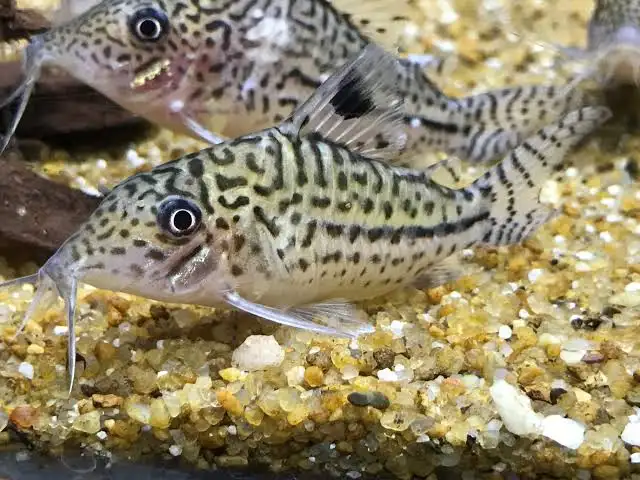
Leopard Corydoras
Additional information
₹900.00 ₹450.00
Description
Leopard Corydoras are attractive, peaceful bottom-dwelling catfish known for their distinctive leopard-like markings, delicate barbels and active, playful nature. They are excellent community aquarium fish and are particularly valuable as a peaceful bottom-dwelling schooling species.
They are social fish and should ideally be maintained in a group of 6 or more, where they become more confident and display natural schooling and foraging behaviour.
Leopard Corydoras
Scientific Name: Corydoras trilineatus
Common Names: Leopard Cory, Three-Stripe Corydoras
Family: Callichthyidae
Origin: South America — primarily Peru, Colombia and surrounding Amazonian regions
Adult Size: Approximately 5–6 cm
Lifespan: Around 5–8 years with proper care
Water Parameters
Temperature: 22–27°C
pH: 6.0–7.5
GH: Soft to moderately hard water
KH: Low to moderate
Ammonia: 0 ppm
Nitrite: 0 ppm
Nitrate: Preferably below 20 ppm
Water Quality: Clean, stable and well-oxygenated
Avoid sudden changes in temperature, pH or water chemistry.
Care & Maintenance
Leopard Corydoras are relatively easy to maintain when provided with clean, mature aquarium water and suitable substrate.
Use fine aquarium sand or smooth, rounded substrate to protect their sensitive barbels while they forage. Avoid sharp gravel or rough substrates.
Provide plenty of swimming space along the bottom, along with driftwood, plants and shaded areas for shelter. Gentle-to-moderate water movement and good oxygenation are beneficial.
Perform regular partial water changes and avoid excessive accumulation of waste on the substrate. Feed a varied diet consisting of high-quality sinking pellets, wafers, granules and suitable frozen/live foods such as bloodworms and daphnia.
Important: Corydoras are not merely “clean-up fish.” They require dedicated feeding and should receive sufficient sinking food to maintain good condition.
Compatibility
Leopard Corydoras are highly peaceful and generally excellent community aquarium inhabitants. They spend most of their time exploring the substrate and searching for food.
They are compatible with peaceful community fish that appreciate similar water conditions. Keep them in groups of 6+, preferably with their own species, for natural social behaviour and increased confidence.
Behaviour & Temperament
Temperament: Very peaceful
Activity: Active bottom forager
Social Behaviour: Strongly social; best kept in groups
Aggression: Extremely low
Swimming Level: Bottom and lower-middle areas
Behaviour: Frequently explores the substrate and occasionally makes quick trips toward the surface.
Natural Behaviour: Shoaling, foraging and resting together
Their occasional rapid movement to the surface is normal Corydoras behaviour and should not automatically be interpreted as a problem, although persistent surface gasping can indicate poor oxygenation or water quality.
Suitable Tank Mates
Good companions include:
Neon Tetras
Cardinal Tetras
Rummy Nose Tetras
Harlequin Rasboras
Zebra Danios
Cherry Barbs
Honey Gourami
Dwarf Gourami (with appropriate temperament)
Peaceful Livebearers
Small peaceful Rainbowfish
Other peaceful Corydoras species
Small, peaceful Plecos
Tank Mates to Avoid
Avoid housing Leopard Corydoras with:
Large aggressive Cichlids
Oscars
Large predatory fish
Aggressive Barbs
Large territorial Catfish
Highly aggressive Gouramis
Fish that are large enough to swallow them
Any species known for persistent fin-nipping or bullying
Pro Tips ⭐
1. Keep them in groups: A group of 6 or more will make them considerably more confident and active.
2. Choose the right substrate: Fine sand or smooth substrate is ideal for protecting their barbels.
3. Feed sinking foods: Make sure food reaches the bottom so Corydoras can feed properly.
4. Maintain excellent water quality: They are sensitive to accumulated waste and poor water conditions.
5. Provide oxygen-rich water: Good aeration and circulation help maintain healthy, active fish.
6. Avoid overstocking: A clean, spacious aquarium promotes better health and natural behaviour.
7. Acclimate carefully: Give newly introduced Corydoras a slow, gentle acclimation to their new aquarium.
8. Don’t rely on them as cleaners: They help consume leftover food but do not replace aquarium maintenance or substrate cleaning.
9. Keep the aquarium mature: A stable, biologically established aquarium is preferable to a newly set-up tank.
10. Watch the barbels: Damaged or progressively shortened barbels can indicate unsuitable substrate or poor aquarium hygiene.
SVR Aquatics ships exclusively within India to all States and Union Territories via Railways or Airways. Customers must collect railway shipments promptly or opt for door-to-door delivery with higher charges for airway shipments. Fish are shipped weekly or biweekly, packed in special styro boxes with GST charges. Live arrival is guaranteed on the first attempt, with a replacement for Dead On Arrival (DOA) reported within 2 hours. Refund/Return policies differ for live fish and dry goods/accessories, with a 25% cancellation fee for unshipped orders. Damaged or wrong items must be reported upon receipt for evaluation and resolution.
Related products
-
 Enquire
 -
 Enquire
 -
 Enquire
Red Oranda Goldfish
₹0.00 -
 Enquire
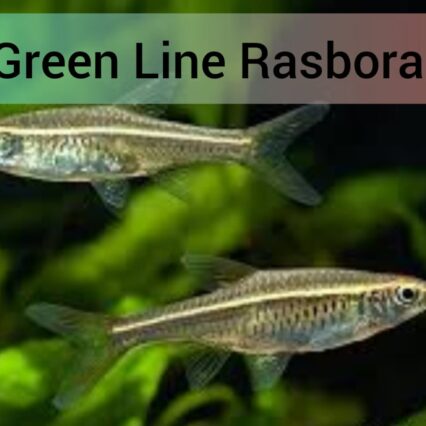
Green Line Rasbora
₹0.00
Description
Leopard Corydoras are attractive, peaceful bottom-dwelling catfish known for their distinctive leopard-like markings, delicate barbels and active, playful nature. They are excellent community aquarium fish and are particularly valuable as a peaceful bottom-dwelling schooling species.
They are social fish and should ideally be maintained in a group of 6 or more, where they become more confident and display natural schooling and foraging behaviour.