

View cart “Blue Oranda Goldfish” has been added to your cart.
Sale!
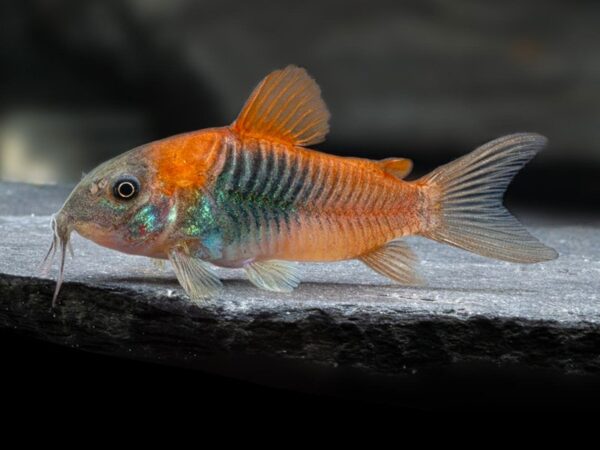
Orange Venezuelanus Corydoras
Additional information
₹1,100.00 ₹900.00
150 in stock
Description
Orange Venezuelanus Corydoras are a highly attractive colour form of the Bronze Corydoras group, admired for their orange-golden body coloration, darker dorsal region and contrasting markings. Their active, peaceful nature and interesting bottom-foraging behaviour make them excellent additions to planted and community aquariums.
They are social catfish that thrive when maintained in groups. A group of 6 or more is recommended, with larger groups providing greater confidence and more natural behaviour.
Orange Venezuelanus Corydoras
Scientific Name: Corydoras aeneus “Venezuela” / commonly traded as Orange Venezuelan Corydoras
Common Names: Orange Venezuelanus Cory, Venezuelan Orange Cory
Family: Callichthyidae
Origin: Venezuela
Adult Size: Approximately 5–6 cm
Difficulty: Easy to Moderate
Temperament: Very Peaceful
Swimming Level: Bottom Dweller
Social Behaviour: Best kept in groups
Water Parameters
Temperature: 22–27°C
pH: 6.0–7.5
GH: Soft to moderately hard
KH: Low to moderate
Ammonia: 0 ppm
Nitrite: 0 ppm
Nitrate: Preferably below 20 ppm
Water Quality: Clean, stable and well-oxygenated
Avoid sudden fluctuations in temperature and water chemistry.
Care & Maintenance
Orange Venezuelanus Corydoras are relatively easy to care for when provided with a mature, stable aquarium and good water quality.
A fine sand or smooth, rounded substrate is highly recommended because Corydoras use their sensitive barbels to constantly search through the substrate for food. Sharp or abrasive gravel should be avoided.
Provide plants, driftwood, caves or other shaded areas where they can rest and feel secure. Good filtration, regular partial water changes and adequate oxygenation are important for long-term health.
Feed a varied diet of quality sinking pellets, Corydoras wafers, granules and occasional frozen/live foods such as bloodworms, daphnia and brine shrimp.
Remember that Corydoras should not be expected to survive purely on leftover food—they require dedicated feeding.
Compatibility
Orange Venezuelanus Corydoras are peaceful community fish and generally coexist very well with other non-aggressive species.
They are best suited to aquariums containing peaceful tetras, rasboras, livebearers, small gouramis and other gentle community fish.
Keep them in groups of at least 6, preferably with several individuals of the same type, to encourage natural social and foraging behaviour.
Behaviour & Temperament
Temperament: Extremely peaceful
Aggression: Very low
Activity: Active and curious bottom explorer
Social Nature: Highly social
Swimming Zone: Bottom of the aquarium
Behaviour: Forages through the substrate, explores plants and decorations, and frequently rests together as a group
Special Behaviour: May occasionally make a quick dash to the surface; this is normal Corydoras behaviour
They are particularly enjoyable to watch during feeding time when the group actively searches the bottom for food.
Suitable Tank Mates
Good tank mates include:
Neon Tetras
Cardinal Tetras
Rummy Nose Tetras
Harlequin Rasboras
Cherry Barbs
Zebra Danios
Small peaceful Rainbowfish
Honey Gourami
Peaceful Dwarf Gouramis
Mollies
Platies
Guppies
Other peaceful Corydoras
Small peaceful Plecos
Other non-aggressive community fish
Tank Mates to Avoid
Avoid keeping Orange Venezuelanus Corydoras with:
Oscars
Large aggressive Cichlids
Large predatory fish
Aggressive Barbs
Large territorial Catfish
Highly aggressive Gouramis
Fish capable of swallowing them
Persistent fin-nippers
Highly territorial or aggressive bottom dwellers
Pro Tips ⭐
1. Keep them in groups: A minimum group of 6 is recommended. Larger groups often display more confident and natural behaviour.
2. Use soft substrate: Fine sand or smooth substrate helps protect their delicate barbels.
3. Feed sinking foods: Ensure sufficient food reaches the bottom rather than relying on leftovers from other fish.
4. Maintain excellent water quality: Stable, clean water is essential for healthy Corydoras.
5. Provide good oxygenation: Well-oxygenated water supports their active nature and overall health.
6. Give them hiding places: Plants, driftwood and shaded areas provide security and resting spots.
7. Don’t overstock: Adequate bottom space and good filtration are particularly important because these fish spend most of their time near the substrate.
8. Acclimate slowly: Take care when introducing them to a new aquarium, especially after transport.
9. Protect their barbels: Damaged or shortened barbels can be associated with unsuitable substrate and poor aquarium hygiene.
10. They are not “cleaner fish”: Orange Venezuelanus Corydoras help consume food particles but still require proper feeding and regular aquarium maintenance.
SVR Aquatics Tip: For the best display, maintain a group of 6–10+ Orange Venezuelanus Corydoras over a soft substrate in a mature, well-filtered community aquarium. Their orange coloration becomes particularly attractive when they are healthy, well-fed and comfortable.
SVR Aquatics ships exclusively within India to all States and Union Territories via Railways or Airways. Customers must collect railway shipments promptly or opt for door-to-door delivery with higher charges for airway shipments. Fish are shipped weekly or biweekly, packed in special styro boxes with GST charges. Live arrival is guaranteed on the first attempt, with a replacement for Dead On Arrival (DOA) reported within 2 hours. Refund/Return policies differ for live fish and dry goods/accessories, with a 25% cancellation fee for unshipped orders. Damaged or wrong items must be reported upon receipt for evaluation and resolution.
Related products
-
 Enquire
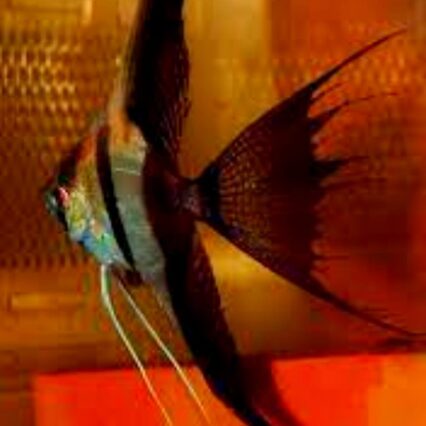
Half-Black Angelfish
₹0.00 -
 Enquire
 -
 Enquire
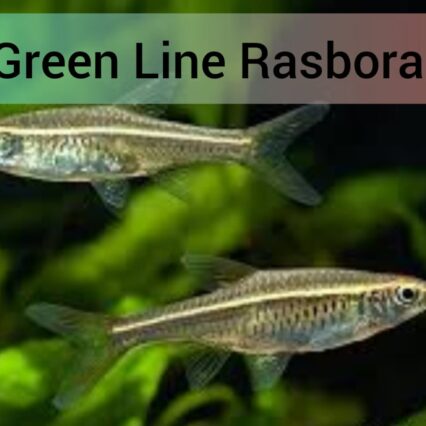
Green Line Rasbora
₹0.00 -
 Enquire
Flowerhorn Cichlid
₹0.00
Description
Orange Venezuelanus Corydoras are a highly attractive colour form of the Bronze Corydoras group, admired for their orange-golden body coloration, darker dorsal region and contrasting markings. Their active, peaceful nature and interesting bottom-foraging behaviour make them excellent additions to planted and community aquariums.
They are social catfish that thrive when maintained in groups. A group of 6 or more is recommended, with larger groups providing greater confidence and more natural behaviour.