

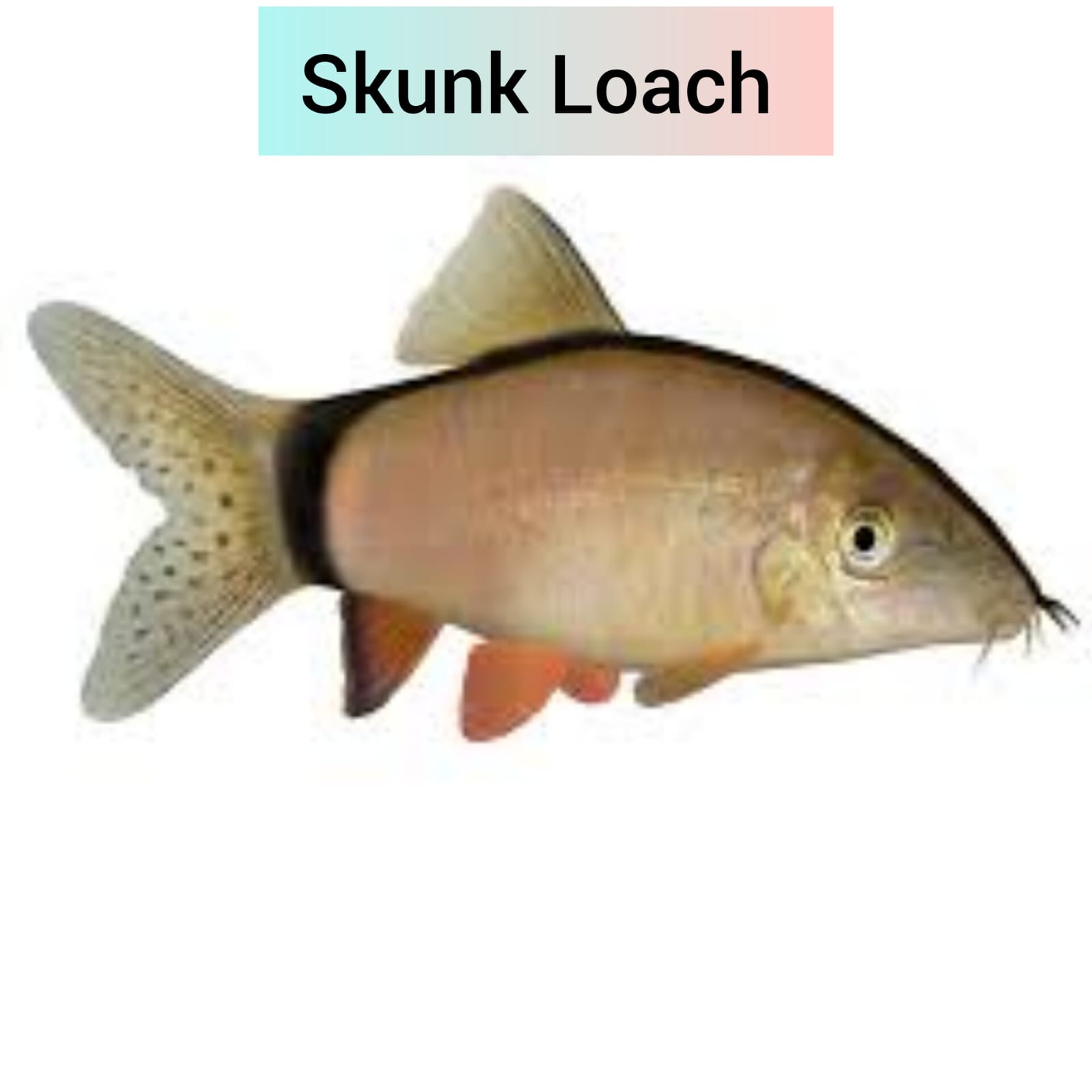
Skunk Loach
Additional information
₹0.00
The Skunk Loach, also known as the Skunk Botia, is a small but bold freshwater loach recognized for its creamy body and a distinctive dark stripe running from the head to the tail—resembling a skunk pattern. Native to Southeast Asian streams, this species is energetic, hardy, and excellent for controlling pest snails. Despite its size, it has a feisty temperament and requires careful tank mate selection.
Skunk Loach (Yasuhikotakia morleti) – Complete Care Guide
Description
The Skunk Loach, also known as the Skunk Botia, is a small but bold freshwater loach recognized for its creamy body and a distinctive dark stripe running from the head to the tail—resembling a skunk pattern. Native to Southeast Asian streams, this species is energetic, hardy, and excellent for controlling pest snails. Despite its size, it has a feisty temperament and requires careful tank mate selection.
Water Parameters
Stable, clean freshwater conditions are essential:
Temperature: 24–28°C (75–82°F)
pH: 6.0–7.5
Hardness: 2–12 dGH
Tank Size: Minimum 75–100 liters (20–25 gallons)
Water Flow: Moderate (prefers some current)
Water Changes: 25–30% weekly
Care & Maintenance
Skunk Loaches are hardy but need proper setup:
Provide a well-structured tank with rocks, caves, and driftwood for hiding.
Use sand or smooth substrate to protect barbels.
Maintain excellent water quality with regular maintenance.
Feed a varied omnivorous diet: sinking pellets, frozen foods (bloodworms, brine shrimp), and occasional vegetables.
Known for eating snails, helping control infestations.
Ensure good filtration and oxygenation.
Behaviour & Temperament
Semi-aggressive to aggressive for its size.
Territorial, especially toward similar bottom-dwelling fish.
Very active and curious.
Can nip fins of slow-moving fish.
Often better kept singly or in carefully managed groups.
Compatibility
Suitable for semi-aggressive community tanks.
Best with fast-moving, robust fish that can handle its temperament.
Avoid peaceful or slow species.
Suitable Tank Mates
Barbs (active species)
Danios
Rainbowfish
Larger tetras
Other robust, fast-moving fish
Tank Mates to Avoid
Slow-moving or long-finned fish (bettas, gouramis)
Small delicate species
Other bottom dwellers (may be bullied)
Shrimp and snails (will be eaten)
Very peaceful community fish
Pro Tips
Provide plenty of hiding spaces to reduce aggression.
Keep in larger tanks if housing with other fish.
Feed regularly to reduce aggressive behavior.
Use secure lid—they can be active and jump.
Monitor interactions—remove overly aggressive individuals if needed.
Ideal for snail control in aquariums.
Summary
The Skunk Loach is a small but bold and energetic fish that adds activity and utility to aquariums. While not as peaceful as other loaches, with proper care, tank setup, and compatible tank mates, it thrives and becomes a lively addition to semi-aggressive setups.
SVR Aquatics ships exclusively within India to all States and Union Territories via Railways or Airways. Customers must collect railway shipments promptly or opt for door-to-door delivery with higher charges for airway shipments. Fish are shipped weekly or biweekly, packed in special styro boxes with GST charges. Live arrival is guaranteed on the first attempt, with a replacement for Dead On Arrival (DOA) reported within 2 hours. Refund/Return policies differ for live fish and dry goods/accessories, with a 25% cancellation fee for unshipped orders. Damaged or wrong items must be reported upon receipt for evaluation and resolution.
Related products
-
 Enquire
 -
 Enquire
 -
 Enquire
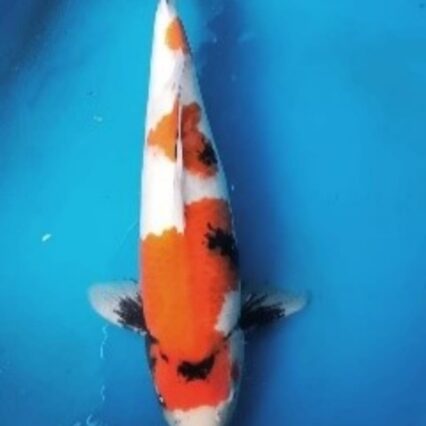
Showa Koi Fish
₹0.00 -
Sale!
 Enquire
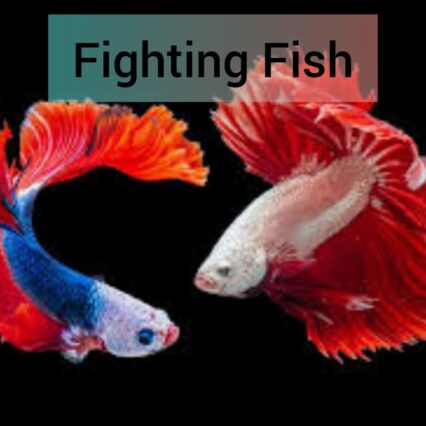
Fighting Fish
₹300.00₹250.00
The Skunk Loach, also known as the Skunk Botia, is a small but bold freshwater loach recognized for its creamy body and a distinctive dark stripe running from the head to the tail—resembling a skunk pattern. Native to Southeast Asian streams, this species is energetic, hardy, and excellent for controlling pest snails. Despite its size, it has a feisty temperament and requires careful tank mate selection.