

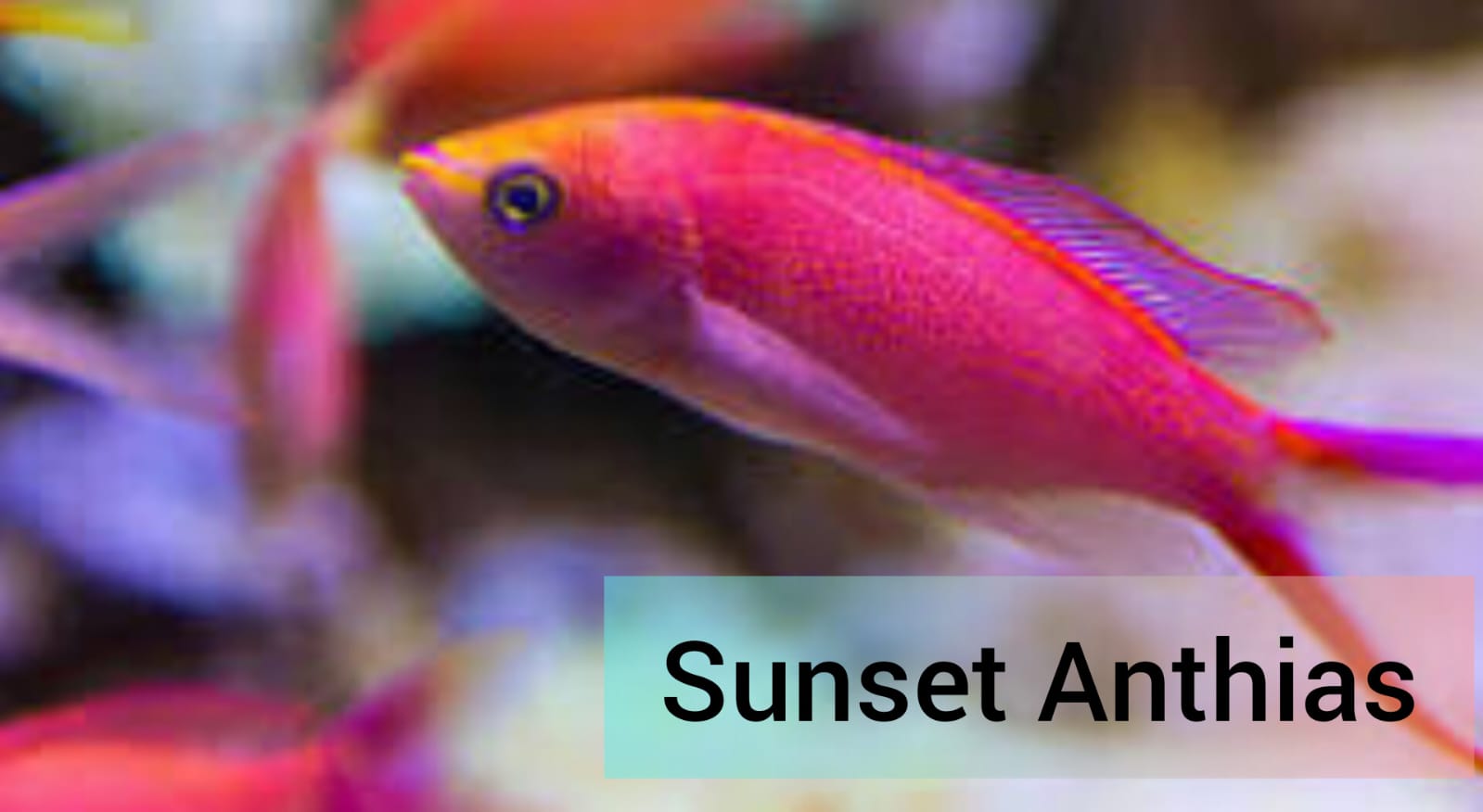
Sunset Anthias
Additional information
₹0.00
The Sunset Anthias is a stunning and vibrant marine fish admired for its warm gradient colors—shades of pink, orange, and golden yellow that resemble a tropical sunset. Males often display more intense coloration and elongated fin extensions, especially during display. Native to Indo-Pacific reef slopes, this species thrives in groups and adds constant movement and color to reef aquariums.
Sunset Anthias (Pseudanthias parvirostris) – Complete Care Guide
Description
The Sunset Anthias is a stunning and vibrant marine fish admired for its warm gradient colors—shades of pink, orange, and golden yellow that resemble a tropical sunset. Males often display more intense coloration and elongated fin extensions, especially during display. Native to Indo-Pacific reef slopes, this species thrives in groups and adds constant movement and color to reef aquariums.
Water Parameters
Maintain pristine, stable reef conditions:
Temperature: 24–27°C (75–81°F)
pH: 8.1–8.4
Salinity: 1.023–1.025 SG
Alkalinity: 8–12 dKH
Tank Size: Minimum 200 liters (50 gallons), larger for groups
Water Flow: Moderate to strong
Water Changes: 10–20% biweekly
Care & Maintenance
Sunset Anthias require attentive care and frequent feeding:
Best kept in a well-established, mature aquarium.
Provide ample swimming space with rockwork for shelter.
Maintain excellent water quality—sensitive to poor conditions.
Feed multiple small meals daily (2–3 times or more).
Diet should include mysis shrimp, brine shrimp, copepods, and high-quality marine foods.
Strong filtration and oxygenation are essential due to their active nature.
Behaviour & Temperament
Peaceful and highly social schooling fish.
Best kept in groups (harems)—one male with multiple females.
Males may show mild dominance displays but rarely cause harm.
Active swimmers, occupying mid-water column.
Can be shy initially but become more confident in groups.
Compatibility
Ideal for peaceful reef aquariums.
Compatible with calm to moderately active marine fish.
Avoid aggressive or overly territorial tank mates.
Suitable Tank Mates
Clownfish
Tangs (peaceful species)
Gobies and blennies
Wrasses (non-aggressive types)
Firefish
Other peaceful reef fish
Tank Mates to Avoid
Aggressive fish (triggers, large wrasses, dottybacks)
Highly territorial species
Large predatory fish
Fish that outcompete them for food
Very boisterous tank mates
Pro Tips
Keep in groups (1 male : multiple females) for natural behavior.
Feed frequently—they have high metabolism and can starve if underfed.
Use a mature tank with stable conditions before introduction.
Ensure strong water movement and oxygenation.
Provide plenty of open swimming space.
Monitor feeding—ensure all individuals are eating well.
Add them before aggressive species for easier acclimation.
Summary
The Sunset Anthias is a vibrant, active, and social marine fish that brings dynamic color and movement to reef aquariums. With proper feeding, stable water conditions, and a peaceful environment, they thrive in groups and become a stunning highlight in any marine setup.
SVR Aquatics ships exclusively within India to all States and Union Territories via Railways or Airways. Customers must collect railway shipments promptly or opt for door-to-door delivery with higher charges for airway shipments. Fish are shipped weekly or biweekly, packed in special styro boxes with GST charges. Live arrival is guaranteed on the first attempt, with a replacement for Dead On Arrival (DOA) reported within 2 hours. Refund/Return policies differ for live fish and dry goods/accessories, with a 25% cancellation fee for unshipped orders. Damaged or wrong items must be reported upon receipt for evaluation and resolution.
Related products
-
 Enquire
Damsel Fish
₹0.00 -
 Enquire
Fire Goby
₹0.00 -
 Enquire
Yellow Face Angelfish
₹0.00 -
 Enquire
Blue Powder Tang
₹0.00
The Sunset Anthias is a stunning and vibrant marine fish admired for its warm gradient colors—shades of pink, orange, and golden yellow that resemble a tropical sunset. Males often display more intense coloration and elongated fin extensions, especially during display. Native to Indo-Pacific reef slopes, this species thrives in groups and adds constant movement and color to reef aquariums.