

- The minimum required quantity for Kohaku Koi Fish (#989142) is 2.
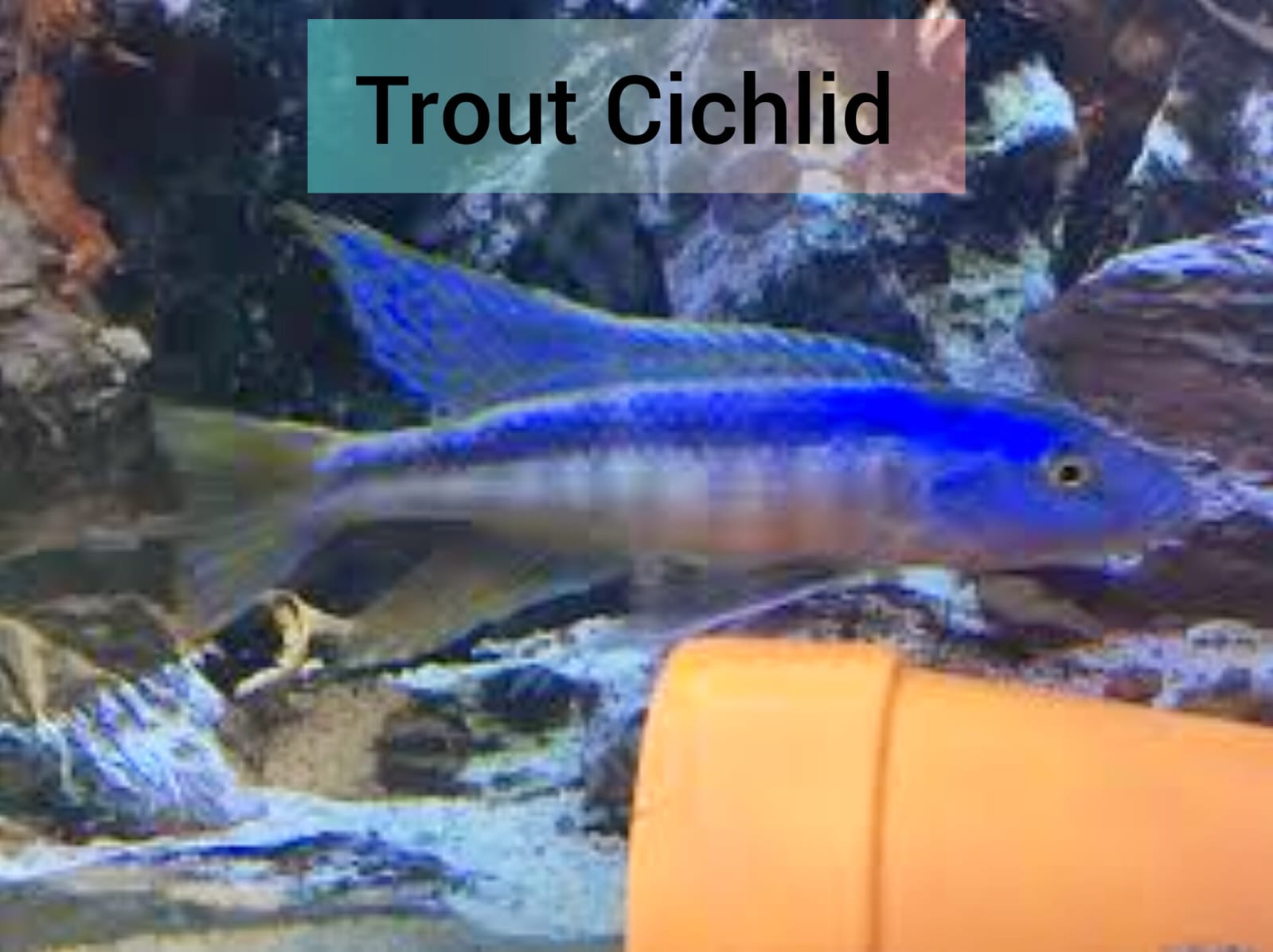
Trout Cichlid
Additional information
₹0.00
The Trout Cichlid, more commonly known as the Peacock Bass, is a large and powerful predatory fish native to South America. It gets the name “Trout Cichlid” due to its elongated body and resemblance to trout-like fish. This species features vibrant coloration with yellow, green, and orange hues along with a distinctive black spot (ocellus) near the tail. It is highly sought after by advanced aquarists for its impressive size, intelligence, and aggressive feeding behavior.
Trout Cichlid (Cichla ocellaris) – Complete Care Guide
Description
The Trout Cichlid, more commonly known as the Peacock Bass, is a large and powerful predatory fish native to South America. It gets the name “Trout Cichlid” due to its elongated body and resemblance to trout-like fish. This species features vibrant coloration with yellow, green, and orange hues along with a distinctive black spot (ocellus) near the tail. It is highly sought after by advanced aquarists for its impressive size, intelligence, and aggressive feeding behavior.
Water Parameters
Temperature: 24°C – 30°C
pH: 6.0 – 7.5
Hardness: 5 – 15 dGH
Tank Size: Minimum 150–300 gallons (very large aquarium required)
Water Type: Soft to moderately hard, clean and well-oxygenated
Stable and pristine water conditions are crucial due to their size and waste production.
Care & Maintenance
Trout Cichlids are demanding and suitable only for experienced aquarists:
Require a very large tank or indoor pond setup
Provide strong filtration and high oxygen levels
Maintain regular and frequent water changes
Use minimal décor to allow open swimming space
Secure the tank with a tight lid, as they are powerful jumpers
Due to their rapid growth and size, long-term planning is essential.
Behaviour & Temperament
This species is highly aggressive and predatory:
Will eat any fish that fits in its mouth
Territorial, especially as it matures
Best kept alone or with very large, equally aggressive species
Intelligent and interactive but not community-friendly
They are active swimmers and require plenty of space to reduce stress.
Suitable Tank Mates
Only compatible with very large and robust species:
Large catfish (e.g., Plecos, Redtail Catfish)
Other large cichlids (with caution)
Arowanas (in very large setups)
Even then, compatibility is not guaranteed and requires careful monitoring.
Tank Mates to Avoid
Avoid all small or medium-sized fish:
Tetras, Barbs, Rasboras
Gouramis
Angelfish
Any peaceful or slow-moving species
These will quickly become prey.
Pro Tips
Not suitable for beginners—requires advanced fishkeeping experience
Feed a high-protein diet (pellets, frozen foods, occasional live food)
Avoid overfeeding to maintain water quality
Ensure massive filtration capacity due to heavy bioload
Plan for adult size (up to 2–3 feet) before purchasing
Best kept in species-only or predator tanks
The Trout Cichlid is a stunning and powerful centerpiece fish, best suited for large, specialized aquariums. With proper care, space, and experience, it becomes an impressive and highly interactive aquatic predator.
SVR Aquatics ships exclusively within India to all States and Union Territories via Railways or Airways. Customers must collect railway shipments promptly or opt for door-to-door delivery with higher charges for airway shipments. Fish are shipped weekly or biweekly, packed in special styro boxes with GST charges. Live arrival is guaranteed on the first attempt, with a replacement for Dead On Arrival (DOA) reported within 2 hours. Refund/Return policies differ for live fish and dry goods/accessories, with a 25% cancellation fee for unshipped orders. Damaged or wrong items must be reported upon receipt for evaluation and resolution.
Related products
-
 Enquire
Albino Dantum Angelfish
₹0.00 -
 Enquire
Orgon Koi Fish
₹0.00 -
 Enquire
Showa Koi Fish
₹0.00 -
 Enquire
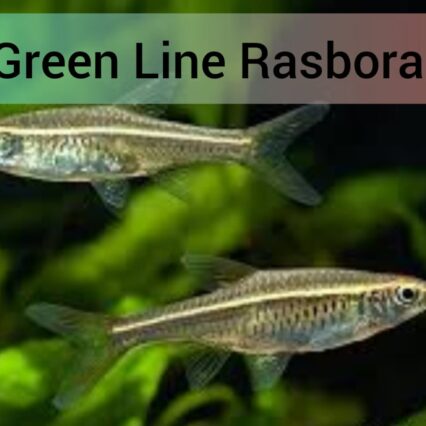
Green Line Rasbora
₹0.00
The Trout Cichlid, more commonly known as the Peacock Bass, is a large and powerful predatory fish native to South America. It gets the name “Trout Cichlid” due to its elongated body and resemblance to trout-like fish. This species features vibrant coloration with yellow, green, and orange hues along with a distinctive black spot (ocellus) near the tail. It is highly sought after by advanced aquarists for its impressive size, intelligence, and aggressive feeding behavior.